A Soggy Strip in the Yard
A line of wet ground or greener grass between the meter and the house, often worse in dry weather when nothing else is wet.
Valdosta, GA · Meter to house
Everything from the street to your water meter belongs to the City of Valdosta; everything from the meter to your house is yours. On your side, water line repair in Valdosta usually means one of two jobs, either digging up a single leak and splicing it, or running a whole new line from the meter to the house. Phone Plumber Valdosta Fix at any hour to sort out which one you're looking at, with the price set before anyone digs. Leak by the meter box? Check which side of the meter it's on first.
Call now, tell us what you're seeing in the yard and get a price.
10+Years helping homeowners get it fixed
Warning signs
The line from the meter to the house is buried and out of sight, so it tends to announce itself in the yard or at the faucets.
A line of wet ground or greener grass between the meter and the house, often worse in dry weather when nothing else is wet.
With every tap off, a faint hiss at the meter box or where the line comes out of the ground at the house.
Every faucet weak at the same time, while the neighbors still have normal pressure.
If it keeps moving after you close the shut-off valve at the house, the leak is in the buried line.
Water washing out soil along the line's path can leave a dip in the lawn or a crack in a walkway.
An old galvanized line rusting through, or a break letting grit in, can show up as discolored water at the tap.
Whose leak is it?
The water meter is the dividing line. It decides who fixes the leak, and who pays for it.
City of Valdosta
Water main, service line, meter
Everything in the street right-of-way, up to the meter, plus the meter and its meter box.
You (call a plumber)
Meter to house, and everything inside
The buried line after the meter, the shut-off valve at the house and every pipe in the building.
In the City's words, it “maintains all water mains and services in the street right-of-way up to the water meter,” and if pipes are broken after the meter or inside the building, “the repair is the responsibility of the property owner.”
So a leak at the meter, a broken meter box or water bubbling up in the street is the City's to fix. A leak anywhere between the meter and your house is a plumber's job.
One leak, one fix
When the line is in decent shape and something broke it, a shovel, a root, settling soil, a spot repair is the sensible fix.
With the shut-off valve at the house closed, a meter that keeps turning means the leak is between the meter and the house.
The plumber listens along the line and traces its path. Metal lines are easy to follow; plastic ones are harder unless someone buried tracer wire with them.
Before any digging, 811 is called so gas, power and cable lines in the yard are marked. It's free, and anyone digging is expected to use it.
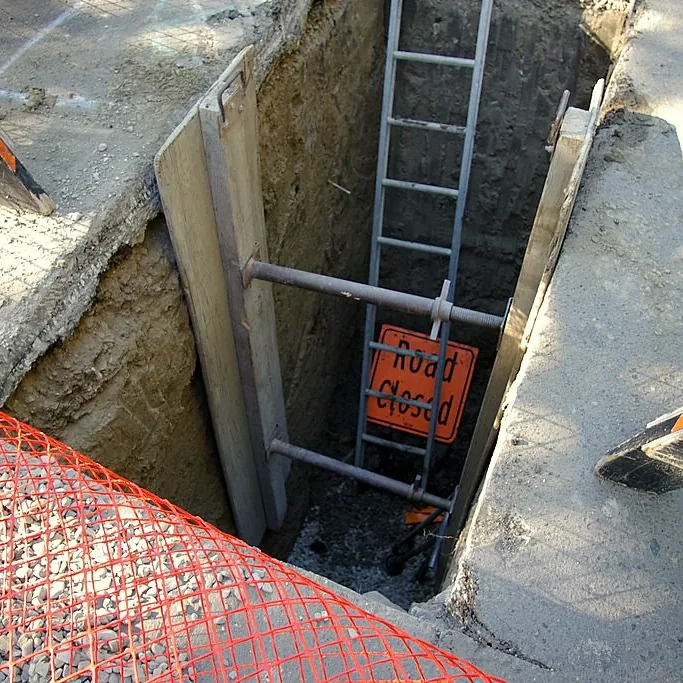
A small hole is dug at the leak, the damaged section is cut out and a repair coupling or new piece of pipe goes in. The line is pressure tested before the hole is filled.
A new line
An old galvanized, polybutylene or thin-wall plastic line that's leaked more than once is usually better replaced end to end. There are three ways to get a new line in the ground.
A narrow trench is dug from the meter to the house and the new line is laid in it. It's the simplest method and lets the plumber see the whole run.
Best forOpen lawn with nothing in the way.
A boring tool pushes a path underground from one small pit to another and pulls the new line back through. Lawns, shrubs and walkways stay put.
Best forLines under a driveway, a sidewalk or landscaping.
A cable pulls a cutting head through the old line, splitting it open while dragging new pipe in behind it along the same path.
Best forAn old line in good alignment, where a new path isn't easy.
Which pipe
Weak faucets
A broken water line is one cause of low water pressure, but not the most common. Work through these in order before anyone starts digging.
If the street lost pressure too, it's likely a main break or City work. The City posts outages and repairs on its website and Facebook page.
The valve at the meter and the shut-off valve at the house, after any recent work, can be left partly closed.
A clogged whole-house filter or a softener stuck mid-cycle can choke the flow to every faucet.
If your home has one, a failing pressure-reducing valve can drop the whole house to a trickle. A gauge on a hose bib tells you fast.
Water escaping underground before it reaches the house shows up as weak pressure and a meter that never stops.
Old galvanized lines rust shut from the inside a little more every year. That's a slow drop, not a sudden one.
Pressure fine at the hose bib but weak inside? The problem is in the house, often old galvanized pipe, a clogged fixture or a failing valve. For every check from one faucet to a well, see why the water pressure is low in your house.
Repiping in ValdostaWater line costs
The pipe is the small part of the bill. The digging, what has to be put back and whether it's a splice or a whole new line set the rest.
The longer the run from the meter to the house, and the deeper it's buried, the more digging and pipe it takes.
Driveways, walkways, trees and irrigation along the path add restoration work, which is when boring often pays off.
Splicing one leak costs far less than a new line, but on an old galvanized or polybutylene line it may just move the next leak.
Water line quotes can include very different amounts of work. These questions make them comparable.
Questions
Costs, pipe materials, digging versus trenchless, and who handles a break on the City's side. For leaks inside the house, see pipe repair.
Call (229) 544-0276A single leak in open lawn is a much smaller job than a new line under a driveway. The price depends on the length and depth of the line, what's on top of it, and whether it's a splice or a full replacement. You'll hear it before anyone digs.
The plumber confirms the leak with the meter, finds the spot, has other utilities marked, then digs a small hole at the break. The damaged piece is cut out, a repair coupling or new section goes in, and the line is pressure tested before the hole is filled.
Yes. On your side of the meter, the water service line is plumbing work, and replacing it inside the City of Valdosta takes a permit. The City handles the mains and the service up to the meter. On a private well there's no City meter, and the supply starts at a well pump instead.
The City of Valdosta. Report water coming up through the ground or pavement in the street to City of Valdosta Utilities, which takes calls about broken mains after hours as well.
There's no set schedule. Copper and PEX lines can last for decades, while galvanized lines and thin-wall plastic tend to fail sooner. Repeated leaks, rusty water or a steady loss of pressure are the signs it's time.
Many plumbers now use PEX or polyethylene from a coil, because the run can be one piece with no joints underground. Schedule 40 PVC and Type K copper are also common. Avoid thin-wall pipe and irrigation-grade tubing.
Often, mostly. Directional boring and pipe splitting need only small pits at each end, which saves lawns, driveways and landscaping. Whether they fit depends on the soil, the old line and what's underground nearby.
First check whether the neighbors lost pressure too, which points to the City. If it's only your house, look at the valves, a water softener or filter, a pressure-reducing valve, or a leak in the line from the meter.
Keep reading
Do the meter test and find out where the water goes.
Leaks and breaks inside the house.
Old galvanized or polybutylene inside the walls too.
When the leak is under the floor, not the yard.
Treat the water once the new line is in.
Water pouring out of the ground right now.
Water Line Trouble in Valdosta? Call Us Now
Wet yards, hissing meters and pressure drops. Tell us what you see and get a price.