Pumping
Solids pumped out before they reach the outlet and wash into the drain field.
What a pump-out includesValdosta, GA · Pumping, cleaning & inspections
If your home isn't on City sewer, everything that goes down a drain ends up in a tank buried in the yard, then in the drain field beyond it. Nearly every costly septic failure starts as something routine septic tank service in Valdosta would have caught, like a tank left too long between pump-outs, a broken baffle, a clogged effluent filter. Call Plumber Valdosta Fix any hour, tell us when the tank was last pumped, and talk the job and its price through before the truck rolls. Sewage coming up in the tub? Stop running water and call.
Call now, tell us when the tank was last pumped and get a price.
10+Years helping homeowners get it fixed
Off City sewer
A septic system is a tank that separates solids from water, and a drain field that soaks the water into the ground. Service keeps both doing their jobs.
Solids pumped out before they reach the outlet and wash into the drain field.
What a pump-out includesThe parts inside the tank that hold solids back, checked and cleaned.
Keeping it workingFor a home sale, a loan or peace of mind, with the tank opened and pumped.
For home salesSlow drains, odors and soggy ground traced to the tank, the line or the field.
Warning signsMany homes on septic also draw from a private well, and well pump repair in Valdosta is a call to the same number.
The pump-out
A septic tank is always full of liquid; that's how it works. “Full” means full of solids, and pumping is how they come out before they reach the drain field.
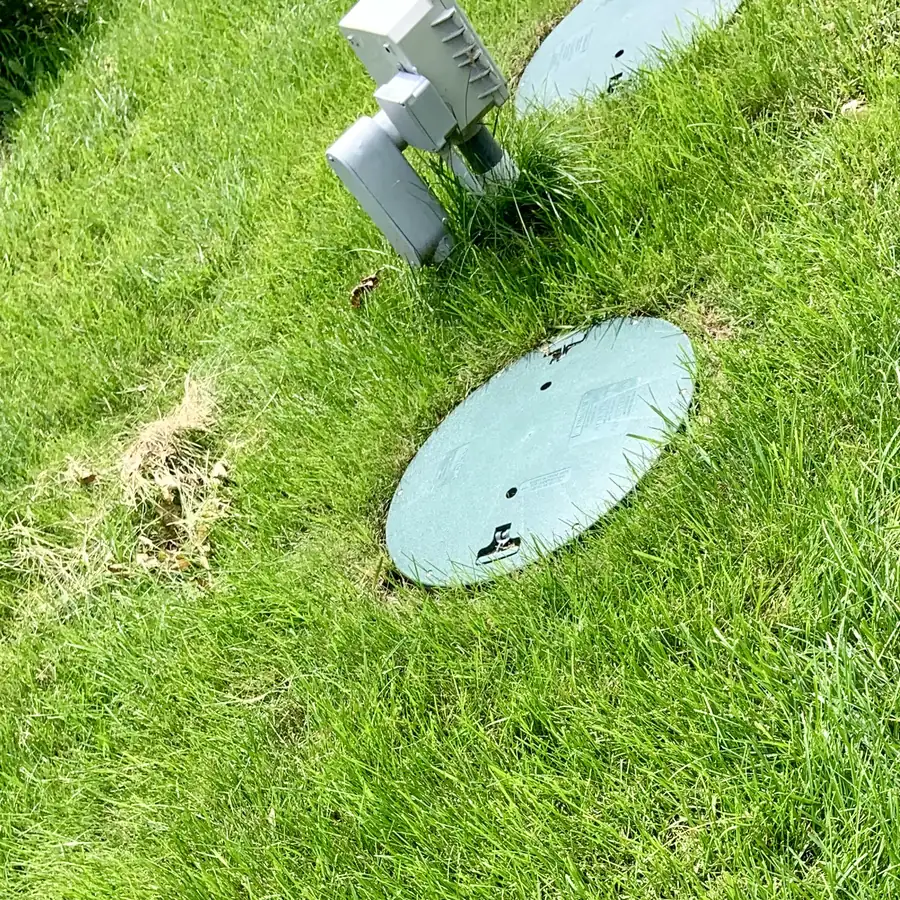
The lids are dug up, often a foot or more down unless the tank has risers. A two-compartment tank has a lid over each side.
The hose goes in through the large access lid, not a small inspection pipe, so the sludge on the bottom can be broken up and pulled out.
With the tank open, the pumper checks the inlet and outlet baffles, the walls, and any roots or cracks.
If there's an effluent filter at the outlet, it's pulled and hosed off back into the tank.
Water running back into the empty tank from the outlet side can mean the drain field is saturated.
The tank fills back to its working level within days of normal use. If drains act up again soon after a pump-out, the trouble is somewhere else, and the warning signs below help narrow it down.
Between pump-outs
What goes down the drains matters more than any schedule. A few habits keep solids, grease and extra water out of the tank.
About additives. Georgia's Department of Public Health puts it plainly on its septic page. “Buying additives/chemicals for your tank? Think again.” The EPA's rule of thumb is to flush nothing but human waste and toilet paper.
Buying or selling
A standard home inspection runs the faucets and flushes the toilets. It doesn't open the tank or test the drain field, and that's where the expensive problems hide.
Be there for it, and ask questions while the tank is open. Septic systems are designed around the number of bedrooms, so if the house has gained a bedroom since it was built, ask whether the system still fits.
House been empty? Run water through the system for several days before the inspection, so the drain field is actually being tested.
Tank, distribution box and drain field located, using any permit drawing on file.
A tank full of solids hides its baffles and walls. Pumping lets the inspector see them.
Baffles, inlet and outlet pipes, the filter, the tank walls and any roots.
Backflow into the pumped tank, wet or smelly spots over the field, and the distribution box.
A written report with photos you can hand to your agent or lender.
Pumping schedule
There's a typical range, and there's a better test. Use the range to plan and the test to decide.
3 to 5 years
How often household tanks are typically pumped, according to the EPA.
Every 3 years
How often the EPA says a household system should be inspected by a septic professional.
The EPA says to pump when any one of these is true.
New to the house? Pump in the first year or two and have the levels measured. That one visit tells you how fast your household fills the tank, which is worth more than any rule of thumb.
Trouble brewing
These show up before sewage comes into the house. Catching them early is usually the difference between a pump-out and a drain field.
One slow sink is a clog. The whole house draining slowly points to the tank, the line or the field.
Toilets and drains that gurgle after water runs elsewhere in the house.
An odor in the yard near the tank or field, or inside near floor drains.
Sewage usually shows up first in a tub or shower, the lowest openings in the house.
Wet spots, standing water or a strip of lush grass over the tank or drain field.
Systems with a pump tank have a high-water alarm. If it sounds, cut back water use and call.
Then the tank wasn't the problem, or wasn't the only one. Check for a running toilet first, then look at these.
Who comes out
It depends on where the problem is, either in the house and the line to the tank, or in the tank and the field.
Whoever comes out should check the liquid level first. Above the outlet pipe means the tank, the filter or the field. A normal level with sewage backing up in the house means a clog in the line, which is plumber work. Don't lean over or climb into an open tank; the gases in it are dangerous.
The Georgia Department of Public Health certifies septic installers and pumpers and publishes a certified pumpers list. Ask any company for its certification. For permits and records, contact Lowndes County Environmental Health.
Questions
How often to pump, whether additives help, how to find the tank, and who to call when the drains slow down.
Call (229) 544-0276The EPA says household tanks are typically pumped every three to five years, with an inspection at least every three years. Your number depends on how many people live in the house, how much water you use, whether you run a garbage disposal and how big the tank is. Measuring the sludge and scum at each pump-out tells you whether to go sooner or later next time.
A new system's price depends on the tank size and material, the soil evaluation, the type of drain field the lot needs, how hard the site is to work, and the county permit. In Lowndes County, permits go through Environmental Health. Get a written price that spells out each part. Installing a new septic tank in Valdosta
Only if the tank itself is overfull. If the backup comes from a clog in the line from the house, a blocked filter or a drain field that's failing, pumping buys a few days at most and the backup comes back. Ask the pumper to check for backflow from the field while the tank is empty.
If one drain is slow, call a plumber. If every drain is slow, start with the tank. A level above the outlet pipe means septic work, and a normal level with backups in the house means a clog in the line, which is plumber work. When you're not sure, call and describe it, and you'll hear who should come out.
Georgia's Department of Public Health is skeptical; its septic page says, “Buying additives/chemicals for your tank? Think again.” Normal household waste keeps the bacteria in a tank going. Additives don't replace pumping.
You can, but the EPA says a disposal means the tank will need pumping more often, and it suggests limiting or skipping it. Food scraps add solids that bacteria break down slowly. Scraping plates into the trash or a compost bin is easier on the tank.
Look for where the sewer pipe leaves the house; the tank is usually 10 feet or more out along that line. Old pump-out receipts may note the location. Lowndes County Environmental Health handles septic permits, so ask them whether a permit drawing is on file for your address. A septic company can also find it with a probe.
Water should be run through the system for several days first, so the drain field is actually being tested. A field that hasn't had water in months can look fine on inspection day and fail once a family moves in. Tell the inspector the house has been vacant when you book.
Keep reading
Baffles, broken lids, pipes and pumps fixed.
When the field can't take water anymore.
New and replacement systems, permitted.
A clog between the house and the tank.
A camera down the line from the house to the tank.
Sewage in the house tonight.
Septic Tank Due? Call Us
Pump-outs, filters, baffles and inspections for Valdosta homes off City sewer. Mention the tank size if you know it and ask about the price.