A new home on land
New construction, or a manufactured home being set, outside the reach of City sewer.
Valdosta, GA · New & replacement septic systems
A new house on land outside City sewer, a manufactured home going onto a family lot, a steel tank that finally rusted through. Each one ends with a new septic system in the ground. Before any digging, the soil gets evaluated and the county issues a permit, because the order of operations in septic tank installation in Valdosta matters more than the tank itself. Call Plumber Valdosta Fix with the lot details and the bedroom count, day or night, and hear what the whole job costs before work begins. Buying land? Get the soil tested before you close.
Call now, tell us about the lot and the house and get a price.
10+Years helping homeowners get it fixed
Who needs one
Most new systems start with one of four situations. Each one goes through the same soil, permit and inspection steps.
New construction, or a manufactured home being set, outside the reach of City sewer.
A rusted-out steel tank, or concrete that's crumbling or cracked below the water line.
A bigger house can need a bigger tank and more field than the original permit allowed.
Found during a sale. Lenders can balk at a system that was never approved.
From soil to sign-off
Six steps, and the paperwork takes longer than the digging. The county is involved at the start and again before anything is covered.
A soil evaluator certified by the state checks the lot. The perc test shows how fast water soaks in, and the report notes how high groundwater climbs in wet months.
The layout, tank size and field go to Lowndes County Environmental Health for a construction permit before any digging starts.
The tank and field are staked out to meet the setbacks from wells, property lines, ditches and the house.
The tank goes in level, with openings and risers sealed against surface water, followed by the distribution box and field lines.
Nothing gets covered or used until the county inspects it and issues written approval. You get a copy of the final inspection report.
Georgia requires the installer to give the owner a notice describing the system, its design and its maintenance needs. Keep it with the permit.
Sized by bedrooms
Georgia sizes a home's septic tank by bedrooms, not bathrooms or square feet, and adds capacity for a garbage disposal.
The rule is 1,000 gallons for one to four bedrooms, plus 250 gallons for each bedroom over four, and 50% more when a garbage grinder is used. Planning to add a bedroom later? Size for it now; a bigger tank costs far less than a second dig.
Two compartments, too. Georgia requires two-compartment tanks, with the first compartment holding at least two-thirds of the tank's liquid capacity. Old single-chamber tanks don't meet that, which is one more reason a replacement is sized and built to today's rules.
| Home | Minimum tank | With a disposal |
|---|---|---|
| 1 to 4 bedrooms | 1,000 gallons | 1,500 gallons |
| 5 bedrooms | 1,250 gallons | 1,875 gallons |
| 6 bedrooms | 1,500 gallons | 2,250 gallons |
These are the state minimums. The permit sets the final size for your lot.
Where it can go
Georgia's rules keep a septic tank clear of water sources, lot lines and the house. After a site visit, the county can allow less or require more.
50 ft
Wells, springs, sinkholes and suction water lines
25 ft
Lakes, ponds, streams and geothermal boreholes
15 ft
A drainage ditch or embankment
10 ft
Pressure water lines and the property line
10 ft
The house foundation, driveways, pools and hardscape (recommended)
On a well? The 50-foot rule is often what decides where everything goes, and the rules ask for the tank to sit downhill from a well where possible. A neighbor's well counts too.
Concrete or plastic
Installers argue about this one. The fair answer is that each suits different lots, and the install matters as much as the material.
Watch forSewer gases can wear at the concrete above the water line over the years, which is why the tank's top and baffles get checked at every pump-out.
Watch forIt depends on careful backfill, can be crushed by vehicles, and needs anchoring where groundwater runs high, or an empty tank can float.
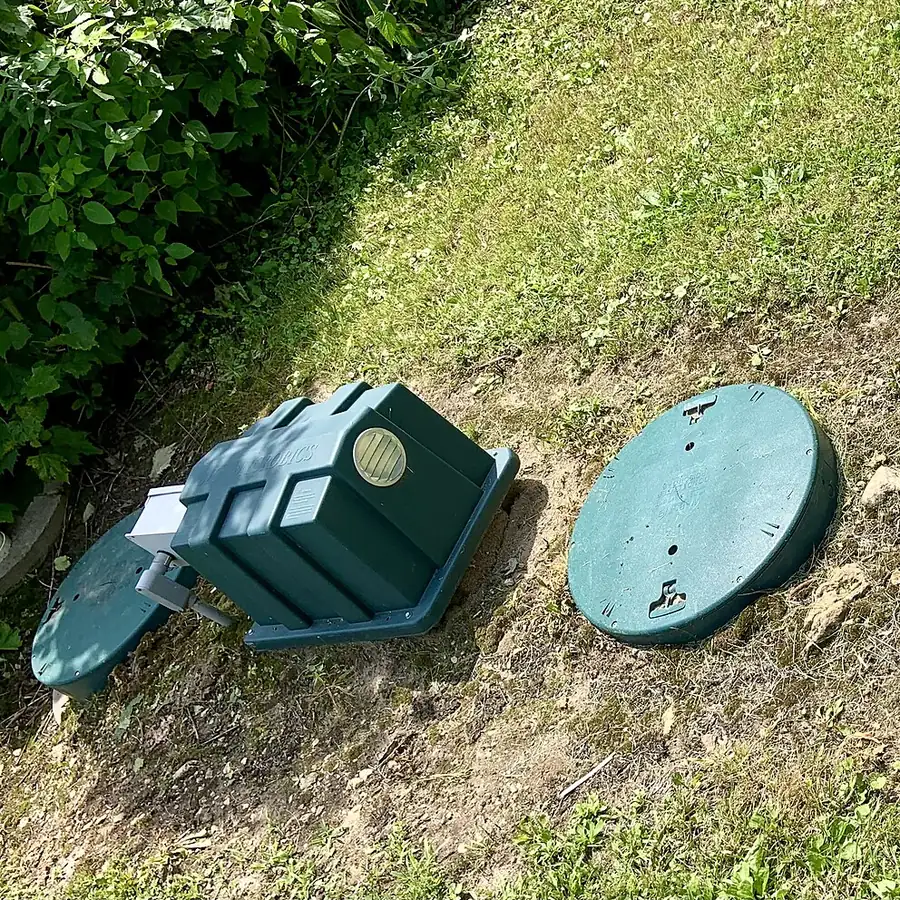
Either way, ask for risers to grade with tight-fitting lids. Georgia's rules require openings and risers to keep out surface water, and risers mean nobody digs for the lids at every pump-out. Septic tank service
Tank only
Old steel tanks rust thin, and some concrete tanks crack or crumble with age. When the field still works, replacing just the tank can be the right call, and it's still permitted and inspected like a new install.
Field failing too? Drain field replacement in ValdostaLowndes County
Every new or replacement septic system in the county goes through Environmental Health, under the state's rules.
The soil comes first. Georgia requires soil evaluations by individuals the Department of Public Health certifies. Their results decide whether a standard field will work, how big it must be, or whether the lot needs a pump tank or an alternative system.
Then the permit. Lowndes County Environmental Health issues the construction permit. Under the state rules, a construction permit stays valid for no more than twelve months, so plan the build around it.
Then the inspection. The rules are clear. “No person may backfill or use an on-site sewage management system until a final inspection has been made by the County Board of Health, and written approval has been issued.” An installer who covers the system before that leaves you with an unapproved system.
Installation costs
The soil evaluation sets most of the price before a single trench is dug. These four things explain the rest.
The number of bedrooms sets the tank size and the length of field, and a garbage disposal raises both.
Soil that drains slowly or groundwater that runs high can call for a larger field, a pump tank or an alternative system.
Concrete or plastic, and how close a truck can get. Lots that are harder to reach cost more to work.
The soil evaluation, design, permit and final grading should be in the price, not added later.
A system goes in once and stays for decades. These make sure it's the right one, done the right way.
Questions
Cost, tank size and material, soil testing before you buy land, and whether Georgia lets you put in your own system.
Call (229) 544-0276It depends on the number of bedrooms, the soil and water table, whether a pump tank or alternative system is needed, the tank material, and how hard the lot is to reach. Get written prices from more than one installer after the soil evaluation, because that's what sets the design.
For the home you live in, a new system usually isn't deductible in the year you pay for it. The IRS lists a septic system among the improvements that add to a home's cost basis, which can lower the taxable gain when you sell. Rentals and business property are treated differently. Ask a tax professional about your situation. IRS Publication 523
The digging and setting are often done in a day or two for a standard system. The soil evaluation, design and permit usually take longer, and the system can't be covered until the county's final inspection, so plan for the paperwork more than the dig.
Georgia's rules set 1,000 gallons for a home with one to four bedrooms, plus 250 gallons for each bedroom over four, and 50% more if the house has a garbage disposal. The permit confirms the size for your lot.
Concrete is heavier and stays put in wet ground, which is why many installers prefer it. Plastic is lighter and fits lots a truck can't reach, but it needs careful backfill and anchoring. How well it's installed matters as much as the material.
Every new system needs a permit and a county inspection before it's covered, and Georgia certifies the people who install septic systems and evaluate soil. Ask Lowndes County Environmental Health what's allowed for your property before you plan any work yourself.
Yes. If the land isn't on public sewer, make a soil evaluation part of your due diligence. Poor soil or a high water table doesn't always rule a system out, but it can mean a larger or engineered system that costs far more.
Often, if the drain field still works. The field should be checked first, because a new tank on a tired field just moves the problem. The replacement still needs a permit, and the new tank is sized to the house as it is now.
Keep reading
When the field, not the tank, is what failed.
The first pump-out and the schedule after it.
Baffles, lids and pumps on an existing tank.
The supply line that has to clear the septic layout.
For homes on a well as well as a septic tank.
Everything inside the house, from leaks to water heaters.
New Septic System? Call Us
Soil evaluation, permit, tank and field for new homes and replacements in Valdosta. Tell us about the lot.