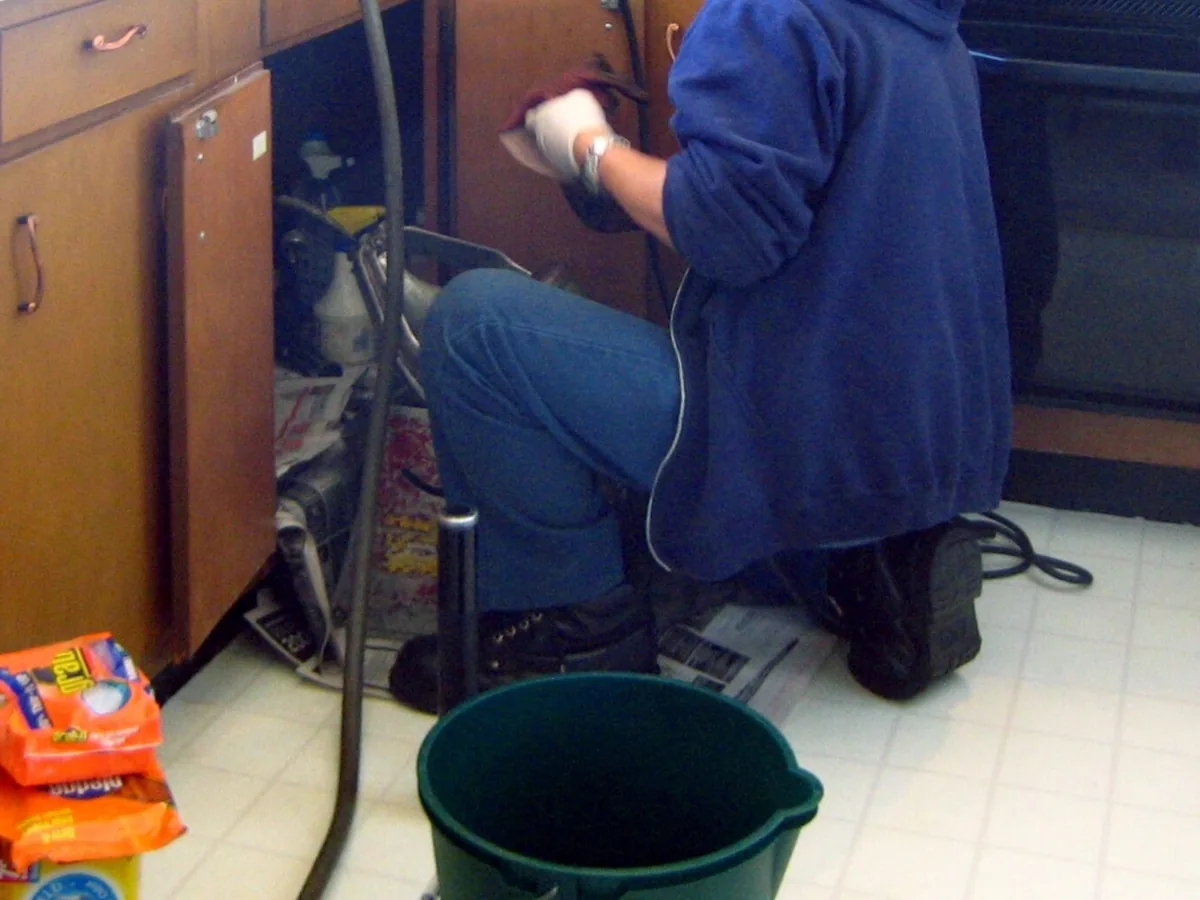
Most store install crews connect a new dishwasher to the valve and drain that are already there. When the shutoff is seized, there's no hot line or drain connection, or something under the sink needs changing, many crews stop and reschedule, and the new dishwasher waits in its box.
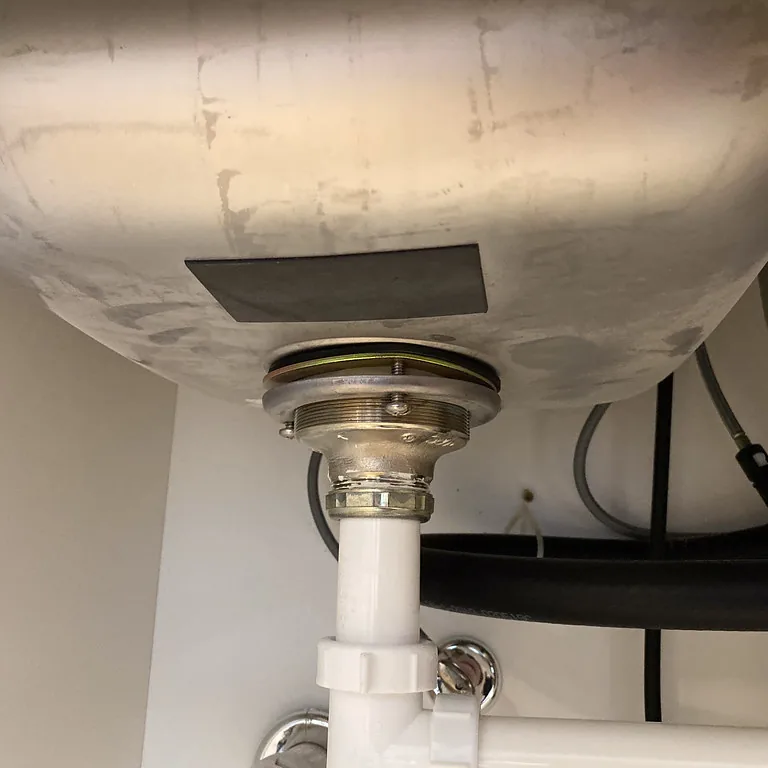
That's the plumbing side, a new shutoff or one with a second outlet, a hot line where no dishwasher sat before, a branch on the tailpiece or an opened inlet on the disposal, and a leak check through the first cycle. The power, an outlet under the sink or a hardwired connection, is electrical work.
Georgia's plumbing code has a home dishwasher's drain hose rise and fasten to the underside of the counter or sink rim before it drops to the sink drain or the disposal. Plumbers call it a high loop, and it keeps dirty sink water from running back into the dishwasher. A drain through an air break into a standpipe is the other way the code allows, and the countertop air gap some states require isn't part of Georgia's rule.
A kitchen that never had a dishwasher can usually get one if there's a cabinet next to the sink to give up. The closer it sits to the sink, the shorter the water and drain runs.